
How Many Lights for a Christmas Tree? A Practical Calculator
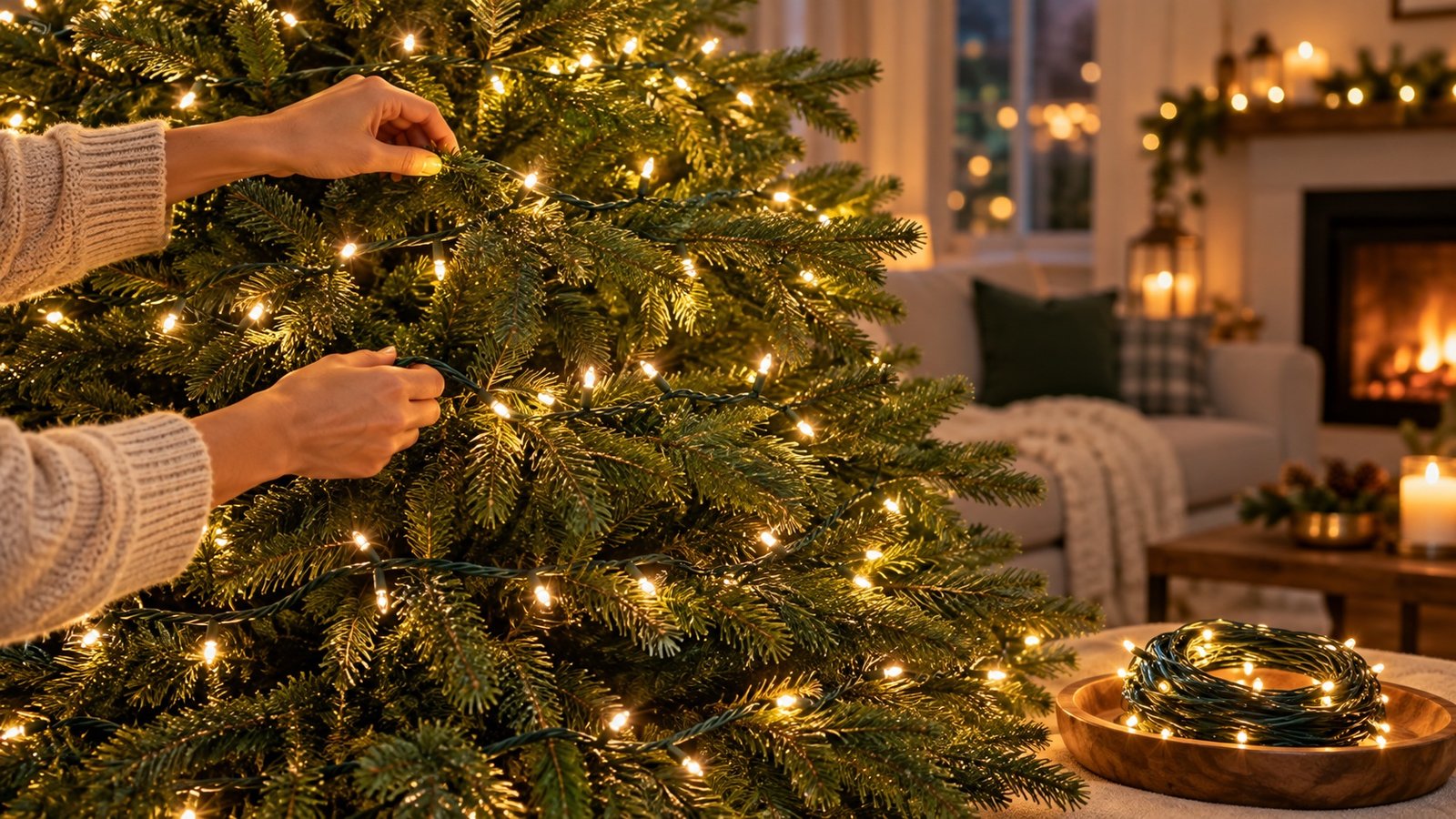
A useful starting point is 50 to 100 mini lights for every foot of tree height. Use the lower end for a slim tree or a gentle glow. Move toward the higher end for a full tree with bright, even coverage. The exact answer also depends on bulb spacing, lighted length, branch density, and how deeply you weave the strands.
How many lights for a Christmas tree?
| Tree height | Soft glow | Classic coverage | Bright, layered look |
|---|---|---|---|
| 4 ft | 200 lights | 300 to 400 | 500 or more |
| 5 ft | 250 lights | 400 to 500 | 600 or more |
| 6 ft | 300 lights | 500 to 600 | 700 to 900 |
| 7 ft | 350 lights | 600 to 700 | 800 to 1,000 |
| 7.5 ft | 375 lights | 650 to 750 | 900 to 1,100 |
| 8 ft | 400 lights | 700 to 800 | 1,000 to 1,200 |
| 9 ft | 450 lights | 800 to 900 | 1,100 to 1,400 |
Treat the chart as a planning range. A wide, densely tipped tree absorbs more light than a pencil tree of the same height. Larger bulbs create fewer points of light but make a stronger visual statement. Before buying, compare the number of bulbs with the strand’s lighted length, not its total cable length.
A simple Christmas tree light calculator
Choose the effect first, then multiply the tree height by a practical rate:
- Soft glow: about 50 lights per foot
- Classic coverage: about 75 to 100 lights per foot
- Bright display: about 125 to 150 lights per foot
For a full 7-foot tree, 7 × 100 gives a classic target of roughly 700 mini lights. If the strands contain 100 bulbs each, that suggests seven strands. Check the permitted number of connected sets on the product label before joining them. Do not assume every string has the same electrical rating.
Tree shape changes the answer
Height is only half of the calculation. A full fir has more branch area to cover, while a slim or pencil tree needs less cable to complete each pass around the trunk.
- Full and extra-full trees: begin near the upper end of the classic range.
- Slim trees: start around 50 to 75 lights per foot, then add a strand if the center looks dark.
- Pencil trees: use the bulb count as a guide, but pay close attention to lighted cable length so the wire does not bunch.
- Snow-flocked trees: lights can appear brighter against pale branches, especially warm white bulbs.
Step back after the first two strands. It is easier to adjust spacing early than to discover a dark band after the ornaments are in place.
Warm white, multicolor, or both?
Warm white lights give the tree a soft golden tone and work easily with burgundy, brass, wood, and traditional ornaments. Multicolor lights feel playful and nostalgic. Cool white lights create a crisper effect on silver, blue, or snow-flocked schemes.
Some pre-lit trees offer more than one color or lighting function. If you prefer a consistent result with less setup, compare the included bulb count and functions in the product details. If you like changing the color story each year, an unlit tree with separate strands gives you more freedom.
LED or incandescent Christmas lights?
LED strings use much less electricity and run cooler than traditional incandescent strings. The U.S. Department of Energy reports that LED holiday lights can use about 70 percent less energy than conventional incandescent strands. They are a practical choice for a tree that will be lit for many evenings during the season.
Incandescent bulbs have a familiar warm appearance, but they draw more power and release more heat. Never mix strand types or connect more sets than the manufacturer permits. Match the wire color to the tree where possible so the cable recedes into the branches.
How to put lights on a Christmas tree evenly
- Test every strand. Replace damaged sets before they reach the tree.
- Start near the outlet. Place the plug end at the lower back of the tree and keep the connection accessible.
- Work in vertical zones. Mentally divide the tree into sections so coverage stays consistent.
- Move in and out. Place some bulbs close to the trunk and others near the branch tips. The depth makes the tree glow rather than look wrapped in a flat spiral.
- Check from across the room. Pause with the room lights lowered and correct dark patches before adding ornaments.
- Secure without pinching. Let branches support the cable. Avoid sharp bends, staples, or anything that can damage insulation.
Christmas light safety matters more than the count
Use lights that have been tested by a qualified laboratory and are labeled for the intended indoor or outdoor location. Inspect cords, plugs, and sockets before decorating. The National Fire Protection Association advises following the manufacturer’s limit for connected strands and turning tree lights off before leaving home or going to bed. The U.S. Consumer Product Safety Commission also warns against damaged sets and overloaded outlets.
A timer or smart plug can make a regular lighting schedule easier, but it does not replace safe installation. Keep connections dry, do not run cords through walkways, and use an extension cord only within its listed rating.
Choose the lights before the ornaments
The lights form the background for every ribbon, bauble, and topper. Decide on color, bulb style, and coverage before choosing the rest of the decoration scheme. If you already own ornaments with reflective finishes, you may need fewer lights because those surfaces multiply the glow.
Browse Christmas lights, compare pre-lit Christmas trees, or read Fred’s lighting guide before making your final choice.