
Christmas Tree Size Guide: How to Choose the Right Height and Width
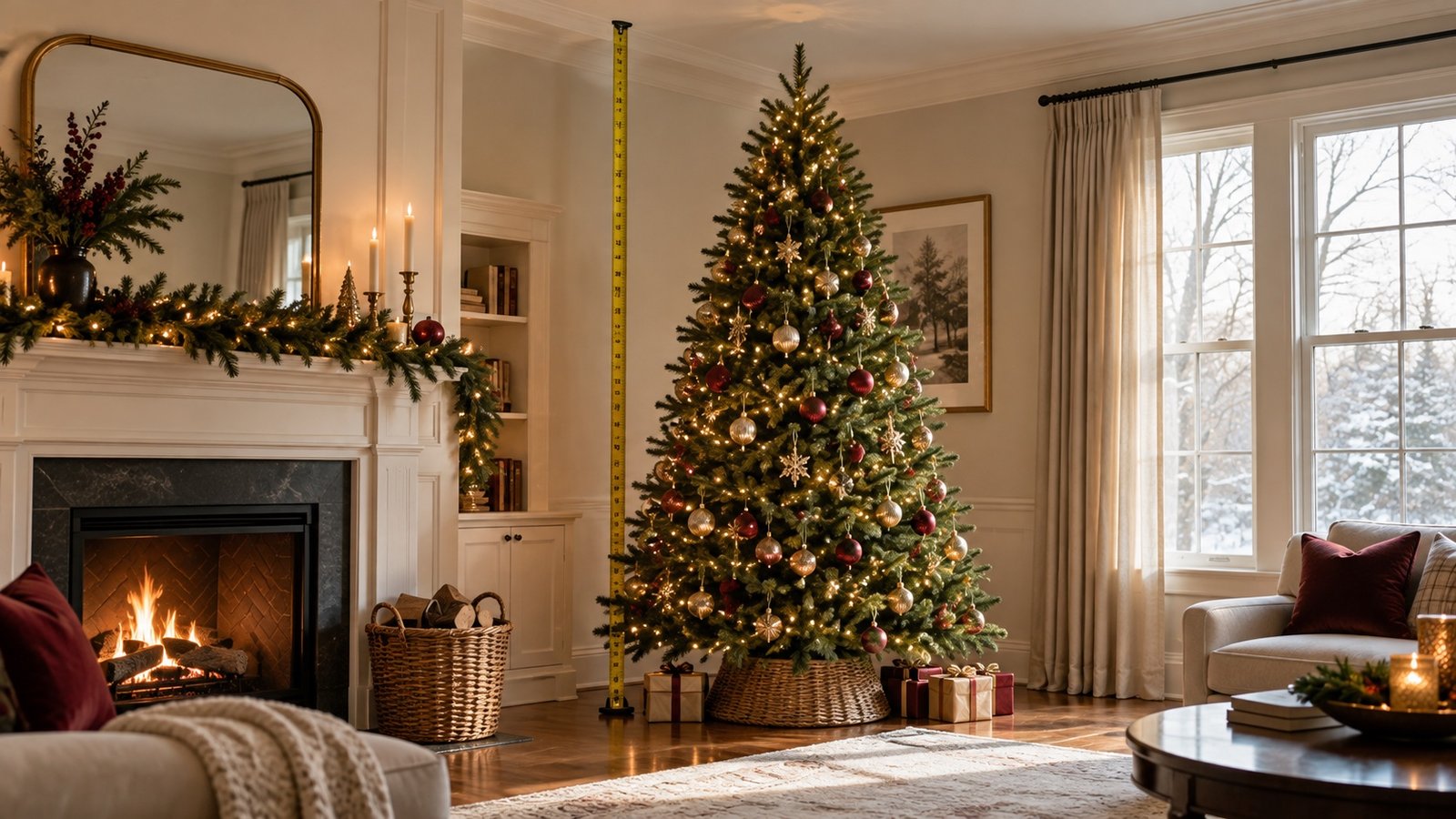
The right Christmas tree should fill the room without crowding the ceiling, furniture, or the people gathering around it. Start with the ceiling height, subtract space for the topper, then check the tree’s widest point against the floor area you can actually spare. A few measurements taken before you shop will prevent most sizing mistakes.
Christmas tree size guide at a glance
For most rooms, leave about 6 to 12 inches between the finished top of the tree and the ceiling. That allowance needs to include the topper. If you use a tall star or bow, measure it before choosing the tree.
| Ceiling height | Suggested tree height | Good fit for |
|---|---|---|
| 7 to 7.5 ft | 5.5 to 6.5 ft | Apartments, bedrooms, and rooms with low ceilings |
| 8 ft | 6.5 to 7 ft | Most living rooms and family rooms |
| 9 ft | 7.5 to 8 ft | Rooms that can carry a taller, fuller centerpiece |
| 10 ft | 8.5 to 9 ft | Large living rooms and open-plan spaces |
| 12 ft or higher | 10 ft and above | Foyers, vaulted rooms, and commercial displays |
These are starting points, not fixed rules. The listed height normally includes the stand but not your topper. Always check the specification on the individual product page.
How to measure for a Christmas tree
- Measure from the floor to the ceiling. Measure where the tree will stand, especially if the ceiling slopes or has beams.
- Measure the topper. Add the full height of the star, angel, bow, or decorative spray you plan to use.
- Choose your clearance. Six inches can work with a compact topper. Allow closer to 12 inches for a taller topper or a room where the tree should feel less compressed.
- Measure the available width. Check the space at the broadest part of the tree, not only the floor around the stand.
- Mark the footprint. Painter’s tape on the floor makes the proposed diameter easier to judge. Walk around it and open nearby doors before deciding.
A simple formula helps: maximum tree height = ceiling height minus topper height minus your preferred clearance. An 8-foot ceiling, a 6-inch star, and 6 inches of breathing room point to a tree no taller than about 7 feet.
What size Christmas tree works with an 8-foot ceiling?
A 7-foot tree is usually the most balanced choice for an 8-foot ceiling. It leaves roughly 12 inches for a topper and visual space. A 7.5-foot tree can work when the topper is short, but measure carefully. A 6-foot tree gives you more flexibility and can look generous once it is raised slightly in a substantial collar or surrounded by presents.
Do not judge height in isolation. A dense 7-foot tree can feel larger than a narrow 7.5-foot tree. In smaller living rooms, a slimmer profile often makes more difference than losing six inches of height.
Full, slim, pencil, and flatback profiles
Profile describes how much floor and visual space a tree occupies. Manufacturers do not use one universal width for each label, so confirm the actual diameter on the product page.
- Full trees create the familiar, generous silhouette people often picture for a main family tree. They suit rooms with open floor area and enough circulation space.
- Slim trees keep much of the traditional shape while reducing the footprint. They are useful beside a sofa, in a dining room, or anywhere a full tree would interrupt a walkway.
- Pencil trees are tall and narrow. They fit apartments, entryways, offices, and paired displays.
- Flatback and half trees sit close to a wall. They give the appearance of a complete decorated tree from the front while reclaiming floor space behind it.
- Tabletop trees bring the same glow to a console, kitchen, bedroom, or small apartment without rearranging the room.
Browse Fred’s Christmas trees by height and profile, then compare the listed width of each model with your measurements.
Allow room for the stand, collar, and branches
The tree stand is normally included in the stated height, but the surrounding finish still affects the fit. A woven collar flares outward at the base. A tree skirt needs enough open floor to lie naturally. Wide lower branches can also project beyond the stated diameter after they are fully shaped.
Measure any existing collar before choosing the tree. Its top opening must clear the stand and lower pole, while the bottom should sit comfortably inside the tree’s overall footprint. You can compare collars, skirts, stands, and storage options in tree accessories.
Think about how the room will be used
A tree that technically fits can still be inconvenient. Keep doors, heating vents, and frequently used walkways clear. Check the view from the sofa and the main entrance to the room. If presents will gather around the base, allow extra space beyond the lowest branches.
For a corner placement, measure both adjoining walls and the diagonal space into the room. For a window, check curtain movement and access to blinds. If the tree is visible from outside, position it far enough into the room that the full shape can be seen rather than pressed against the glass.
Do not forget assembly and storage
Tall trees arrive in multiple sections, but you still need enough working room to assemble and shape them. Check doorways, stairs, and elevators if the tree must travel through a tight route. After Christmas, the carton or storage bag needs a dry place where branches will not be crushed.
A hinged artificial tree becomes fuller after every branch is opened and shaped. Plan the room around the finished dimensions, not the narrow silhouette you see during assembly.
A final sizing checklist
- Ceiling height measured at the exact tree location
- Topper height and desired clearance included
- Maximum width marked on the floor
- Doors, vents, windows, and walkways kept clear
- Collar or skirt checked against the stand and lower branches
- Assembly route and storage space confirmed
Once those measurements work, choose the shape and lighting that make the room feel like Christmas. Shop Christmas trees at Fred’s or use the contact page if you would like help comparing listed dimensions.